
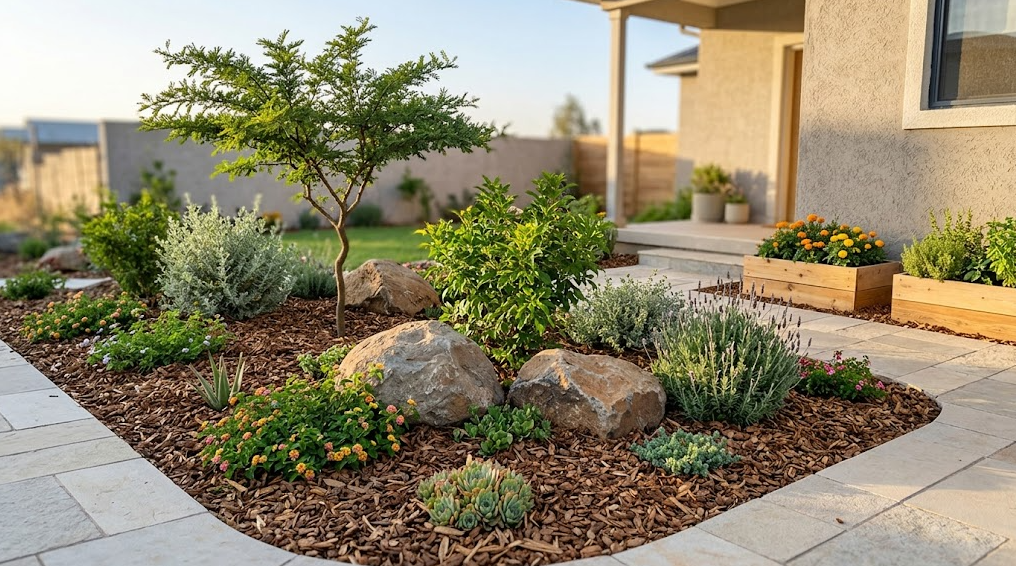
Transforming your front yard into a beautiful garden doesn’t require a professional crew or a massive budget. Whether you’re a total beginner or just looking for a low-maintenance refresh, the key is planning with your climate in mind and keeping the design simple.
Here is an easy, digest-friendly guide to creating a stunning front yard garden.
1. Plan for Your Environment
Before you buy a single plant, understand your space.
- Know Your Zone: Check your local planting zone to ensure the plants you love will actually thrive in your region.
- Sun Mapping: Observe your yard for a few days to see how much light it gets.
- Full Sun: 6+ hours of direct sunlight.
- Partial Sun: 3–6 hours of sunlight.
- Shade: Less than 3 hours of direct sunlight.
2. Simplify Your Layout
A “simple landscaping front yard” look is often the most elegant.
- Design in Layers: Follow the “anchor” formula: use a taller element (like a small tree or large shrub) at the back, medium-sized shrubs in the middle, and low-growing flowers or groundcovers at the front.
- Choose Textures over Variety: Instead of buying one of everything, plant fewer varieties in larger numbers. This creates a cohesive, high-impact look that is easier to maintain.
- Think in Curves: Organic, curved garden edges feel more natural and inviting than rigid, straight lines.
3. Low-Maintenance Secrets
Keep your weekends free by choosing plants that work for you.
- Ditch the Lawn: If you have a small area, consider replacing grass with gravel, paved paths, or large, hardy evergreen shrubs.
- Use Groundcover: Tough “groundcover” plants knit together to help suppress weeds naturally.
- Mulch is Magic: Always add a layer of mulch after planting. It acts as a sunlight barrier to stop weeds, keeps your soil moist, and gives your garden a clean, professional finish.
4. Basic Maintenance for Beginners
- Water Wisely: Pay attention to plant tags for specific needs, and avoid overwatering.
- Weeding Defense: The best weed control is prevention. Plant densely to crowd out weeds, or use “sheet mulching” (placing cardboard over unwanted grass/weeds) to smother them before you start your new beds.
- Fertilize Naturally: Keep things simple by using organic matter like compost, or even household items like crushed eggshells and coffee grounds to give your soil a boost.
Pinterest Pro-Tip: Create a mood board first! Focus on photos of yards with similar climates to your own to ensure your “dream garden” is actually realistic for your specific environment.