How Much Paint Do I Need for a Small Bathroom? (Easy Calculator & Guide)
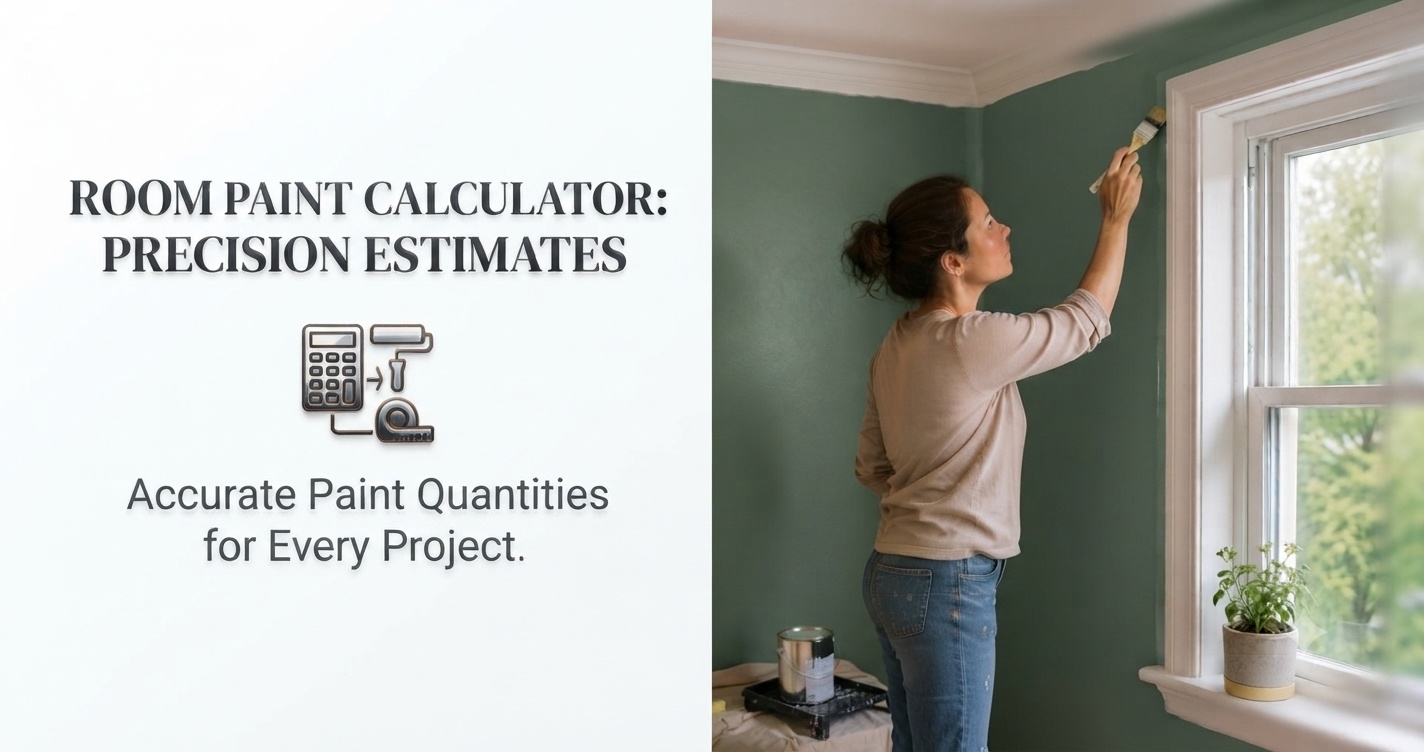
Painting a small bathroom looks simple until you start guessing how many cans of paint you need. Moisture, cramped walls, doors and tiles make it easy to buy too much or too little. This guide and calculator help you estimate the exact amount of paint for your small bathroom, then adjust for coats and special finishes.
Room Paint Calculator
Recommended Tools for This Project
- Painter's tape → Masking tape for any project! Get yours today!
- Mini foam roller kit → 4 inch mini foam paint roller kit, Get yours!
- Angled sash brush for cutting in → This sturdy paintbrush will make painting easy and quick! Great for any paint.
- Paint edger tool → Say goodbye to messy paint lines! This painter makes painting edges a breeze.
- Canvas drop cloth → All Purpose Heavy Duty Protection for Furniture & Surfaces, Reusable
- Mold-resistant primer
This post contains affiliate links. As an Amazon Associate, I earn from qualifying purchases at no extra cost to you.
How to Use the Small Bathroom Paint Calculator
Using the calculator takes less than a minute:
- Measure the length, width and height of your bathroom walls.
- Enter the number of doors and windows (the tool automatically subtracts standard sizes).
- Choose the number of coats based on your project (usually 2 coats for bathrooms).
- Click “Calculate Paint Needed” to see total paintable area and gallons required.
The tool assumes a typical paint coverage (around 350 sq ft per gallon) and adjusts for the number of coats you select, which is ideal for most small bathrooms.
Step‑by‑Step: Measuring a Small Bathroom for Paint
To get accurate results from the calculator, measure your bathroom like this:
- Measure wall length and width
Use a tape measure to record the length of the longest wall and the width of the shortest wall. In most small bathrooms, these are around 5–8 feet each, but always measure instead of guessing. - Measure wall height
Measure from floor to ceiling. Common heights are 8–9 feet. If your ceiling drops in some areas, use the average height. - Count doors and windows
Include the main bathroom door and any windows. The calculator subtracts typical door and window areas so you don’t overestimate paint for glass or openings. - Exclude areas you won’t paint
If large sections are fully tiled from floor to ceiling, you can treat them like “extra windows.” Either add them as additional deductions or reduce your wall measurements to match the painted sections only.
How Much Paint Do You Need for a Small Bathroom?
Most small bathrooms fall into one of these rough ranges:
- Very small bathroom (around 5 × 7 ft, standard height)
Usually 1 gallon is enough for 2 coats on the walls, assuming you’re not painting the ceiling or heavy tile areas. - Typical small bathroom (around 6 × 8 ft, standard height)
Expect to need 1–2 gallons for 2 coats, depending on how much of the wall is tiled and whether you are painting the ceiling. - Larger “small” bathroom or combined toilet/shower room
If the calculator shows you slightly over 1 gallon, it’s often safer to buy 2 gallons for good coverage and touch‑ups.
Use your calculator’s result as the main reference. If you’re close to a full gallon (for example, 0.8–1.2 gallons), rounding up to the next full gallon is smart to avoid patchy areas and allow for future touch‑ups.
How Many Coats of Paint Does a Small Bathroom Need?
Bathrooms are high‑moisture spaces, so number of coats matters more than in a bedroom:
- 1 coat
Suitable for quick touch‑ups on the same color, or refreshing paint that’s still in good condition. Not ideal if you’re changing color or have stains. - 2 coats (recommended)
Standard for most small bathrooms. It improves coverage, color richness and durability in humid conditions. This is the best choice for most projects. - 3 coats
Useful for drastic color changes (dark to very light, or vice versa), covering strong stains, or switching from glossy to matte or specialty bathroom paints.
Set the calculator to 2 coats for normal use, and only switch to 3 coats if you’re making a big color change or dealing with heavy wear.
Best Paint Types for Small Bathrooms
Even a perfect calculation won’t help if the paint type is wrong. For small bathrooms, look for:
- Moisture‑resistant paint
Paints labelled for bathrooms or kitchens are formulated to resist humidity, mold and peeling. They’re ideal for shower areas and poorly ventilated spaces. - Semi‑gloss or satin finish
These finishes are easier to wipe and clean, which matters in tight spaces where water splashes and soap residue are common. - Primer or self‑priming formulas
If you’re painting over bare plaster, stained walls or a very different color, use a primer or a self‑priming paint to improve adhesion and coverage.
You can mention specific brands or local products elsewhere on your site, especially if you’re targeting a particular country or region.
Common Bathroom Paint Estimation Mistakes
Avoid these frequent issues:
- Ignoring doors, windows and tiles
If you don’t subtract non‑painted areas, you buy too much paint and waste money. Your calculator’s deductions help prevent this. - Forgetting the ceiling
If you plan to paint the ceiling, include it in your calculation or add a note about needing extra paint for ceilings. - Underestimating color change
Jumping from dark to light or glossy to matte can require more coats than expected. Always factor this into the calculator’s “number of coats” setting. - Using generic living‑room assumptions
Bathrooms behave differently because of moisture, frequent cleaning and tiles. Always plan for more durable paint and at least 2 coats.
Example: Calculating Paint for a Small Bathroom
Here’s a simple example to show how your calculator works in practice:
- Bathroom size: 6 ft (length) × 8 ft (width) × 8 ft (height)
- Doors: 1 standard door
- Windows: 1 small window
- Coats: 2 coats on the walls
When you enter these values, the calculator:
- Computes total wall area based on length, width and height.
- Subtracts average areas for the door and window.
- Multiplies the remaining wall area by the number of coats.
- Divides by typical coverage per gallon to estimate how many gallons you need.
This gives you a clear, data‑based answer to “How much paint do I need for a small bathroom?” instead of relying on guesswork.
Get Your Small Bathroom Paint Estimate Now
Before you buy your next can of paint, use the calculator above to estimate exactly how much you need for your small bathroom. Then save or print the result so you can bring it to your local paint store or check prices online. If you’re planning a larger renovation or painting multiple rooms, you can reuse the same calculator for each space to avoid over‑buying or running out mid‑project.